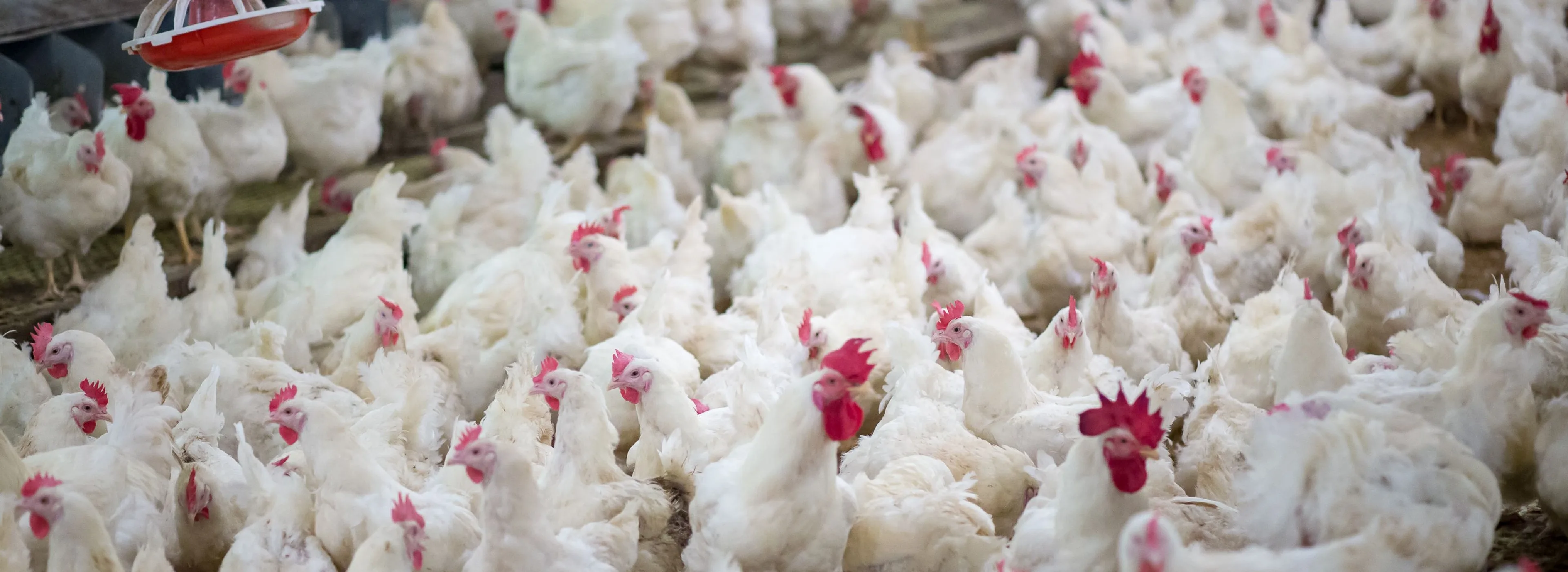
Factory farming fuels yet another avian flu outbreak
A new outbreak of avian influenza has been confirmed at a chicken breeding facility in Sweden, where approximately 50,000 birds have been culled. Project 1882 argues that factory farming must be phased out in favor of a transition to plant-based food production.
Last week’s confirmed case of avian influenza in Sweden is far from the first. The disease is highly contagious and spreads rapidly once it enters large-scale factory farms, resulting in the culling of all animals, even those who are not sick. In total, more than 4 million birds have been culled due to avian influenza in Europe in just the past month. Meanwhile, the Swedish government and the EU continue to invest substantial resources in maintaining the current system instead of transforming it.
Project 1882 argues that these repeated outbreaks clearly demonstrate how the sheer number of animals and the extremely high production density drive both the spread of infection and the resulting consequences for animals and humans.
– The recurring outbreaks in factory farms are no coincidence but a direct result of political decisions that favour intensive animal farming. When tens of thousands of animals are crowded together in industrial systems, viruses will continue to spread. We need policies that deliberately reduce the number of animals in these facilities, along with a sustainable food strategy where plant-based production forms the foundation, says Benny Andersson, CEO of Project 1882.
Several characteristics of today’s intensive factory farming systems are directly linked to increased risks of disease transmission, virus mutation, and the emergence of new zoonotic diseases.
Below is a summary of some of Project 1882’s proposed measures:
-
Introduce a final deadline after which no more than 100 animal units may be kept at a single facility.
-
Develop a risk-based premium to finance state costs during disease outbreaks, with larger facilities paying higher premiums.
-
Increase the minimum distance between facilities housing the same animal species to reduce the risk of disease transmission – setting a minimum of three kilometres.
-
Require mandatory pre-approval processes that include biosecurity assessments, incorporating restrictions on large-scale operations and minimum distances between facilities.
-
Conduct risk assessments prior to biosecurity inspections and require high-risk facilities – such as large-scale chicken farms producing fast-growing broilers – to finance their own inspections.
-
Include a target in the national food strategy to halve meat consumption by 2030.
-
Redirect subsidies away from meat and dairy production to strengthen Swedish cultivation and processing of plant-based proteins.
– The Swedish government must phase out the factory farms that repeatedly create risks for animals, the economy, and public health. The major virus outbreaks show how unsustainable today’s high levels of meat consumption are. A plant-based transition is not only possible – it is necessary, concludes Benny Andersson.
The outbreak in Sweden comes amid a broader surge of highly pathogenic avian influenza across Europe, where several countries have recently reported new cases on poultry farms. This shows that the problem is not isolated but widespread.
Read more:
Help us save lives!
Project 1882 strives for a world where every animal life matters. By supporting our work, you help make our vision a reality.
